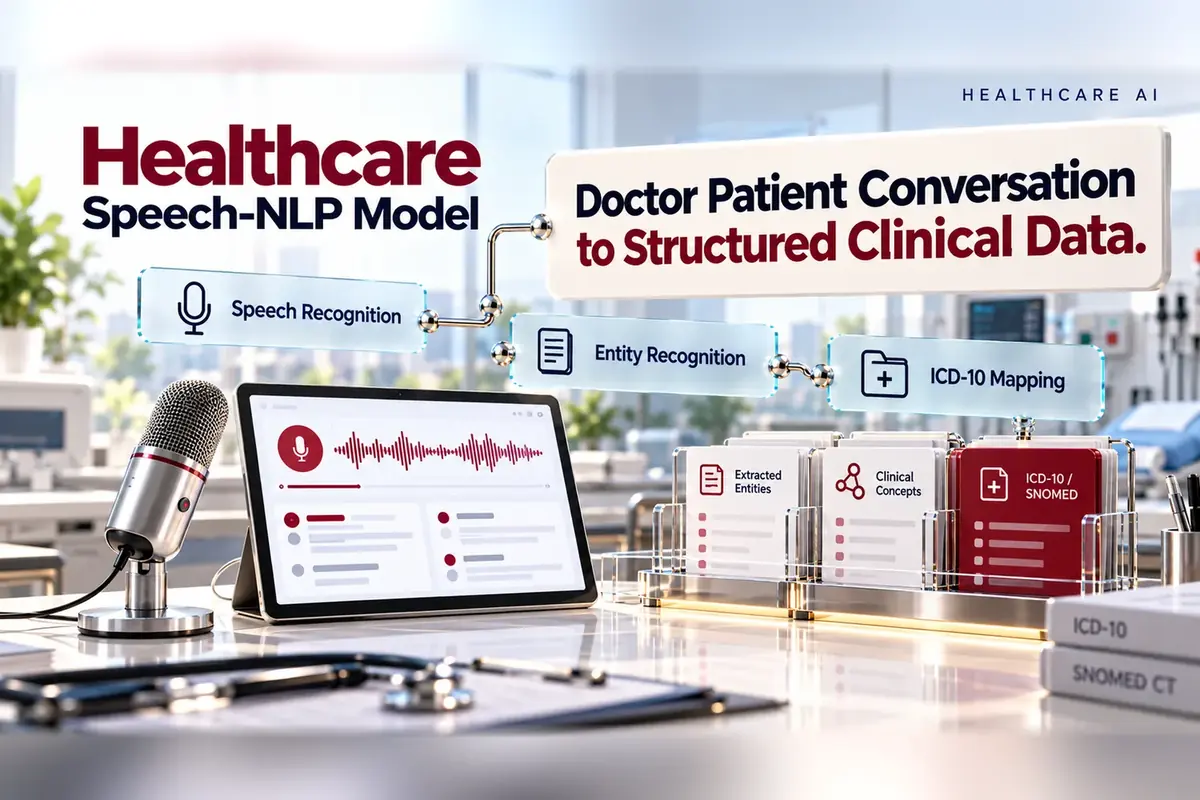
Unstructured text and speech
Notes and conversations do not arrive in a form EHRs and analytics tools can read.
AI for Symptoms, Diagnoses, Medications and Lab Data
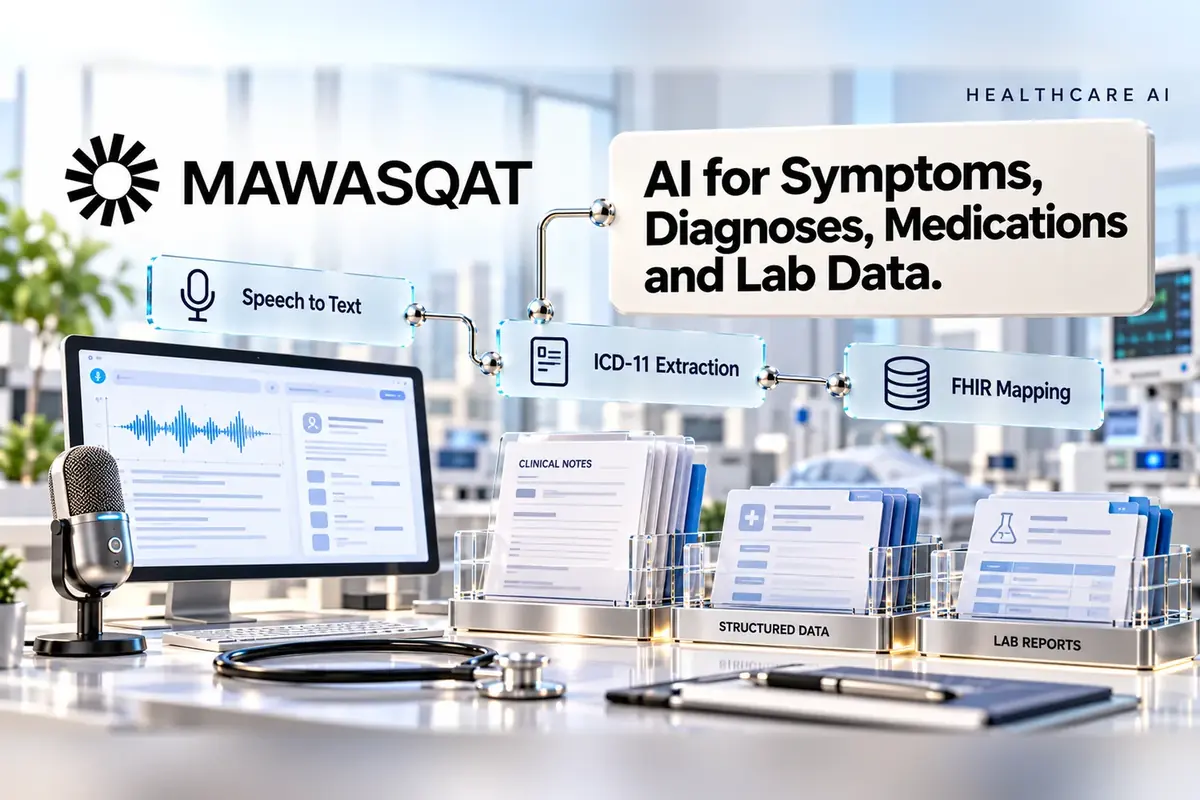
This Mawasqat product uses clinical NLP and speech-to-text to turn unstructured clinical speech and text into structured, interoperable data for EHRs, analytics and downstream AI systems.
What stood in the way.
Clinical information often starts as speech or free text. Turning it into structured, interoperable data is difficult, because symptoms, diagnoses, medications and lab tests are described in many different ways.
Notes and conversations do not arrive in a form EHRs and analytics tools can read.
Speakers and accents differ, which makes accurate transcription harder.
Structured output has to follow healthcare standards so other systems can use it.
How we answered it.
We built an AI pipeline that combines multi-model speech-to-text with clinical NLP. It detects symptoms, extracts ICD-11 diagnoses and medical entities, understands medications, identifies lab tests and summarises encounters
The parts that made the difference.
The model detects symptoms mentioned in EHR text.
Several speech-to-text models are used to transcribe clinical speech.
Diagnoses are extracted and coded to ICD-11.
Medical entities are pulled out of the text as structured fields.
What changed for the client.
The product turns unstructured clinical input into data other systems can use.
What it was built with.
Part of our AI and machine learning work.
The next big thing starts with a conversation.
An idea, a challenge, a “what if”. Tell us what you have in mind, and we’ll figure out the next step together.
What happens next
Find us on